

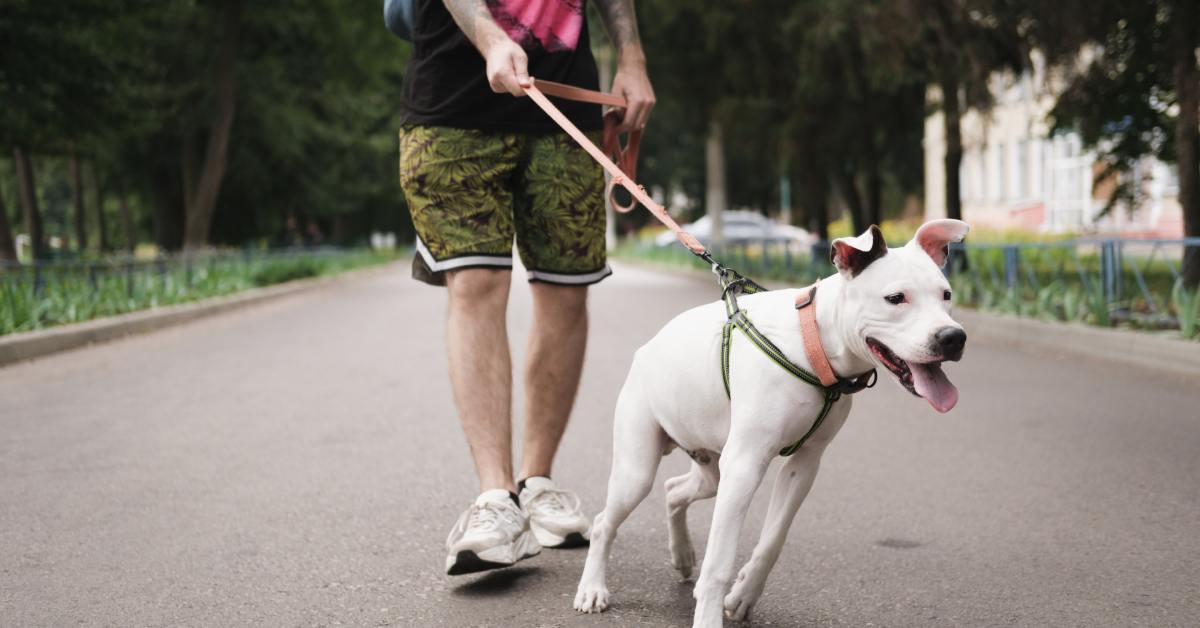
Leash reactivityis when a dog has an over-the-top emotional response while on leash, such as barking, lunging, growling, whining, spinning, or freezing. It most often happens when they see another dog, a person, a bike, cars, or other exciting triggers.
If you have a high-energy dog who can’t seem to behave normally while leashed, your peaceful neighborhood walks can turn into stressful ordeals. Fortunately, you can address leash reactivity with the right approach and consistent practice. Let’s explore how to get your energetic canine more comfortable on a lead.
Why High-Energy Dogs Struggle More With Leash Reactivity
Any dog can display leash reactivity, but it’s more common in energetic breeds. That’s largely because your dog’s brain operates in overdrive. They notice everything—every squirrel, every person, every dog three blocks away. This heightened awareness creates more opportunities for reactive episodes. Your dog wants to investigate, play, or escape, but the leash prevents these natural responses. Upon encountering this barrier, your frustrated dog might begin displaying their reactive behaviors.
It’s also true that many high-energy breeds don’t get enough physical and mental stimulation. If the leash walk is their only outlet, each emotional trigger can become an overwhelming event.
How To Mitigate Reactivity
Below are the top strategies for helping your dog behave more even-keeled on leashed walks.
Tire Them Out Before the Walk
It’s much harder to train a dog that’s bouncing off the walls. High-energy dogs benefit from serious physical exercise before you work on leash reactivity. A tired dog has lower arousal levels, so play fetch in the backyard or run your pup on the treadmill. Try to also tire them out mentally with things like puzzle toys or scent work.
Create Distance Between Your Dog and Triggers
Distance is your best friend when working with reactive dogs. The farther away the trigger, the better your dog can manage their emotions.
Start training at distances where your dog notices the trigger but doesn’t react. This threshold distance varies by dog. Some dogs need 50 feet, while others need 200 feet. You’ll know you’ve crossed the threshold when your dog starts tensing up, staring, raising their hackles, or displaying another reactive behavior.
If a trigger gets too close, cross the street or turn around. You can also consider choosing less busy times for walks, like early mornings or late evenings. These strategies give you more control over the training environment.
Make Them Look at You
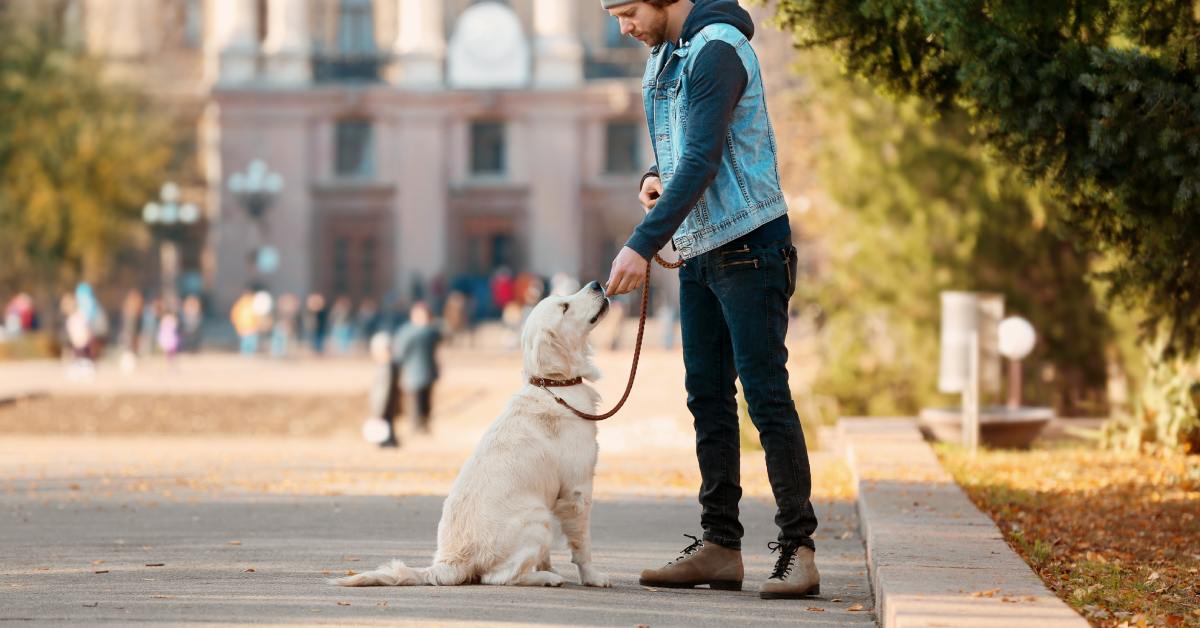
When your dog sees a trigger, you want them to look at you instead of letting their emotions get out of hand. Here’s the training process:
- Wait for your dog to notice a trigger at a safe distance.
- The moment they look at it, call their name.
- If they look at you, mark with “yes” and reward with a treat.
- Repeat until your dog starts looking at the trigger then immediately back at you.
- Gradually decrease distance over weeks of practice.
If your dog doesn’t acknowledge you when you call their name, they don’t get a treat. But when they do, they get a treat every single time. Eventually, your dog learns to simply acknowledge the trigger and return focus to you because they want the reward.
This technique works because it honors your dog’s need to be aware of their environment while building a new association. Seeing another dog predicts treats instead of conflict.
Provide High-Value Treats
Your dog needs motivation strong enough to compete with their reactivity. Regular kibble won’t cut it. Break out the good stuff—real chicken, cheese, hot dogs, freeze-dried liver, or whatever else they go wild for.
Also, keep these treats easily accessible in a pouch at your hip. You need to reward within one second of the desired behavior.
Practice Emergency U-Turns
Sometimes triggers appear too close, too fast. When that happens, you need an escape plan: the emergency U-turn.
Train this at home first. Say, “Let’s go” in an upbeat voice, spin 180 degrees, and reward your dog for following. Practice until your dog responds immediately to the cue.
On walks, use this skill whenever you spot a trigger approaching your threshold distance and your dog seems poised to react. There’s no shame in retreating.
Stay Consistent and Patient
Progress with leash reactivity happens gradually—sometimes, very gradually. You’ll have good days and setbacks.
Celebrate the small wins. Your dog stayed focused while another dog passed 40 feet away instead of 50? That’s progress. Your dog recovered from a reaction in 10 seconds instead of 30? That’s progress. As long as your dog is overall reacting less often and with less intensity, you’re moving in the right direction.
When To Take Your Dog to a Trainer
Some leash reactivity cases need professional intervention. Consider taking your dog to a trainer if the following apply:
- You’ve tried these techniques consistently for months without improvement.
- Your dog’s reactions put the safety of you, your dog, or other people and pets at risk.
- Your dog shows aggression beyond typical leash reactivity.
- Your own anxiety about walks interferes with training.
Visit Balanced K9 Academy
If your high-energy dog’s reactivity is too much for you to handle, we can help. At Balanced K9 Academy in Huntsville, Alabama, we specialize in behavior modification for challenging cases, including leash reactivity, dog-to-dog aggression, human aggression, resource guarding, separation anxiety, and severe fear issues. Our approach is fair, balanced, and individualized, and we can work with you hands-on so you leave with practical tools you can use at home and on walks. When you’re ready for dog behavior training that gives you a real path forward, book with us.
Final Thoughts
The work required to address leash reactivity in high-energy dogs demands your dedication, but peaceful walks are worth the effort. Your excitable dog has incredible potential once you channel their intensity productively.
Remember that reactivity doesn’t define your dog’s character. They’re responding to feeling overwhelmed in stimulating environments. You’re teaching them skills to handle those feelings differently.
Each walk is an opportunity to practice and improve, and some days will challenge you more than others. Keep showing up, keep training with patience, and your dog will gradually transform into the walking companion you’ve hoped for.