

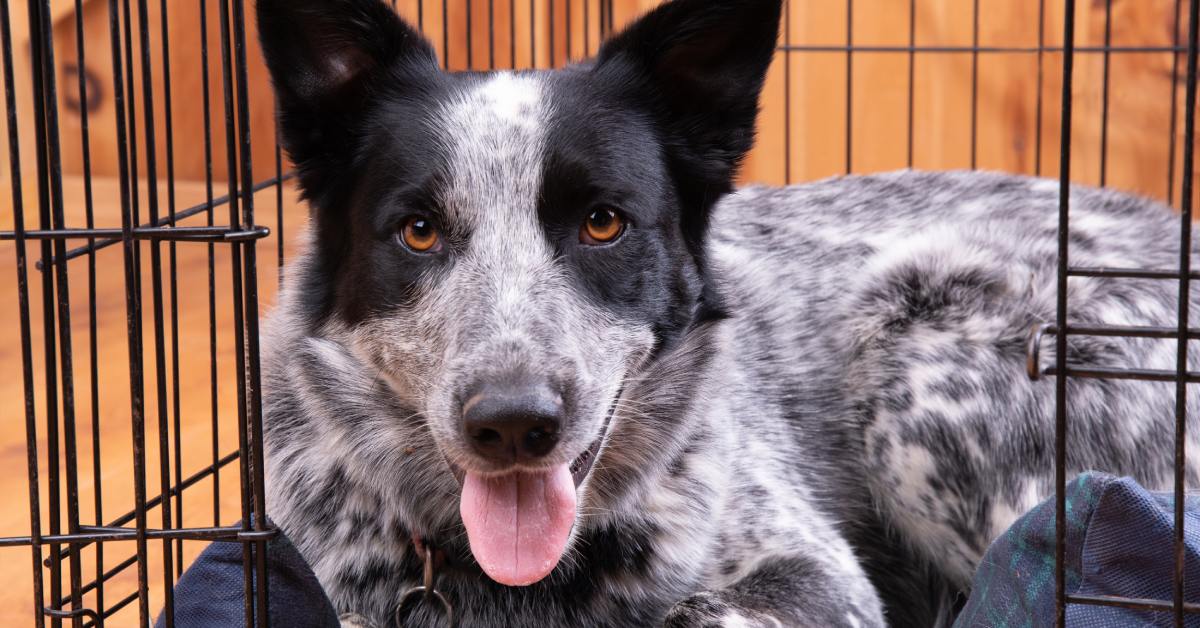
Most dogs don’t arrive home already comfortable with a crate. That’s completely normal, but it’s something you’ll want to change. There will inevitably come a time when you need to crate your pet. Maybe you need to take them to the vet or have them accompany you on a road trip. Or perhaps you need to know they can lie down and be calm in a contained area while you run errands for a couple of hours. All in all, having a dog who is comfortable and even interested in being in a crate is a huge plus, and you can make it happen.
Here’s how to train your dog to love their crate.
Why Crate Training Is Actually Good for Your Dog
First, let’s address a misconception that many people have: Crating a dog is unkind. Though many owners do treat crate time as punishment (which can be harmful), the act is not inherently bad or scary for your canine. In fact, a crate done right is a sanctuary, not a punishment. Dogs are den animals by nature, and a well-introduced crate gives your pup a place that’s calm, predictable, safe, and entirely theirs.
A crate-comfortable dog has lower anxiety during travel, feels calmer at vet visits, and has a reliable retreat when the house gets loud or chaotic. It also makes house training dramatically easier, since most dogs instinctively avoid soiling their sleeping space.
Choosing the Right Crate
So crate-training your dog can actually be beneficial for them, so long as you handle the process well. The first thing to consider is the type of crate you buy.
Size
Your dog’s crate should be large enough for them to stand up, turn around, and lie down comfortably. It should certainly be nothing less, and ideally it should be nothing more. A crate that’s too large can actually slow house training, because your dog has enough room to sleep in one corner and eliminate in another.
If you have a puppy who will grow significantly, buy a crate sized for their adult body and use a divider panel to reduce the interior space as they grow.
Material
Wire crates give good ventilation and let your dog see their surroundings. Plastic travel crates create a cozier, den-like atmosphere that some dogs prefer. Hard-sided furniture-style crates blend into your home decor.
Try to match the crate style to your dog’s personality. Anxious dogs sometimes settle better in a more enclosed space, while curious, social dogs may prefer seeing what’s going on around them. If you get an open design, you can always throw a blanket over the top to soothe a reactive or anxious dog’s nerves.
Step-by-Step: Building a Positive Association
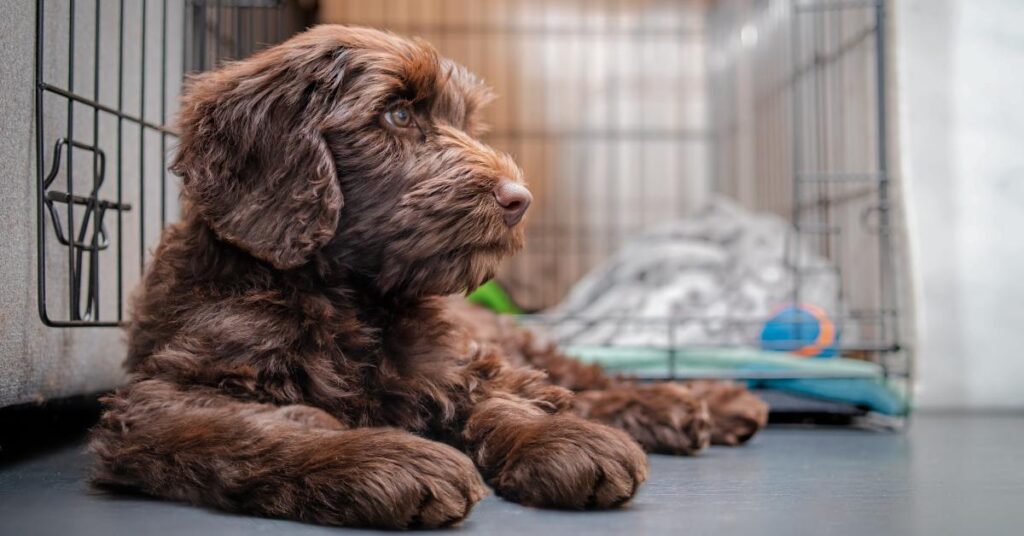
Once you have the right crate, you can introduce your dog to it. But do not rush this process. Immediately forcing your dog into the enclosed space can make them fear the crate and resist all future training efforts to the contrary.
Step 1: Introduce the Crate With Zero Pressure
Place the crate in a common area where your family spends time. Leave the door open and let your dog investigate at their own pace. Put a few high-value treats near the entrance, then just inside, then toward the back. Don’t push or lure your dog in. Instead, let curiosity do the work.
By being patient and keeping treats around and in the crate, you signal to your dog that the space is a safe area where good things appear.
Step 2: Feed Meals Near (Then Inside) the Crate
Once your dog is approaching the crate without hesitation, start placing their food bowl just inside the entrance. Gradually move the bowl further back over several meals until your dog is eating comfortably with all four paws inside and the crate door open.
When that’s going smoothly, you can try closing the door while they eat and opening it the moment they finish. Over time, extend how long the door stays closed after the meal ends, by just a minute or two at a time.
Step 3: Build Duration Slowly
Now it’s time to practice crating outside of meals. Lure your dog in with a treat, give a simple cue like “crate” or “bed,” and close the door. Stay in the room at first. Reward calm behavior through the door, then let them out before any whining or restlessness starts.
Step 4: Practice Departures
Once your dog is relaxed in the crate with you present, start leaving the room briefly. Come back before your dog gets anxious, but gradually extend the time you’re out of sight.
The key here is variability. Don’t always leave for the same amount of time. Your dog shouldn’t know exactly when you’ll be back since that reflects real life.
Make the Crate a Place Your Dog Actually Wants to Be
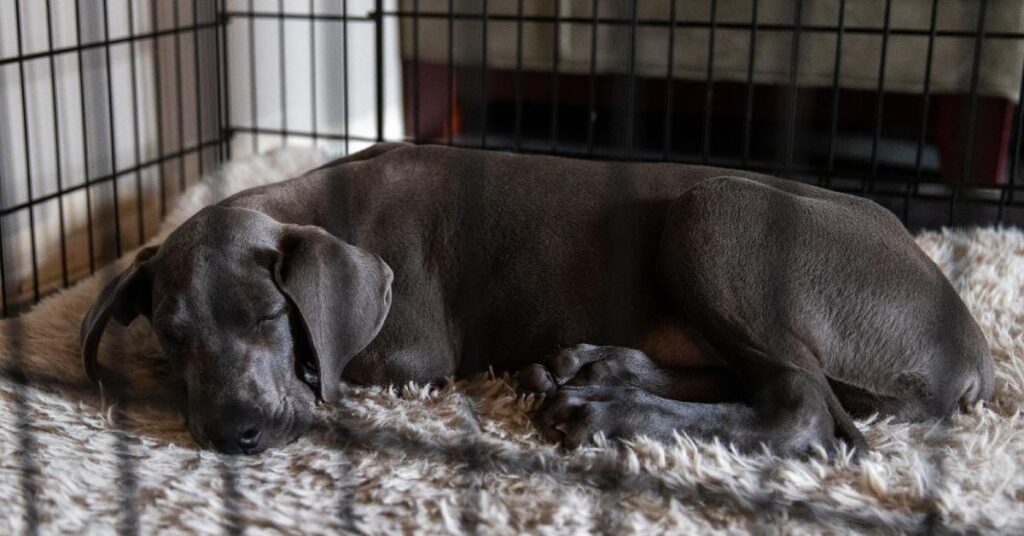
One of the most important tips for training your dog to love their crate is to make it a place they enjoy being. So layer in the good stuff. A crate with a worn T-shirt that smells like you, a long-lasting chew, or a frozen Kong becomes a place your dog actively chooses, not just tolerates.
You’ll know you’ve set it up right when your dog wanders into the crate on their own and curls up without any prompting. That’s the goal—a dog who sees the crate as their spot, regardless of whether you’re asking them to step inside.
Common Mistakes To Avoid
Now, let’s review the mistakes that many well-meaning dog owners make and why avoiding them matters.
Using the Crate as Punishment
The moment the crate becomes associated with your frustration, all your progress unravels. Send your dog to their crate calmly, and never in anger.
Moving too Fast
Skipping steps because your dog “seems fine” is the most common way to end up with a dog who panics in the crate. Trust the process.
Letting Them Out When They Whine
If your dog whines and you open the door, you’ve just taught them that whining works. When training, try to open the crate before they whine. If that’s not possible, wait for a pause in the vocalization. That quiet moment is what you’re rewarding.
Crating too Long
A crate is not a solution to an under-exercised dog or a place to put them all day while you’re at work. Adult dogs can handle four to five hours in a crate during the day, and puppies need to be let out much more frequently.
You’ve Got This
The process of getting your dog comfortable with their crate is gradual by design, because what you’re really building is trust. A dog who trusts that the crate is safe, that you’ll return, and that good things happen inside will settle comfortably every time.
If you’d like hands-on guidance through the crate training process—or any other aspect of obedience—the team at Balanced K9 Academy in Huntsville, Alabama, is ready to help. We use the NePoPo® dog training method, which combines negative and positive reinforcement around three core principles: timing, consistency, and motivation. Book today or contact us to learn more.