
Getting your dog to learn a skill or change a behavior can be challenging. But it all comes down to timing and consistency. If you immediately reward a behavior and do so every time the behavior occurs, your dog will eventually learn what you want from them. Marker training is crucial in this process, but most dog owners don’t implement it at home. Here’s everything you need to know about what marker training is and why it’s important.
How Marker Training Works
Marker training is a communication system. You use a specific signal, called a marker, to mark the exact moment your dog performs a correct behavior. That marker tells your dog, “Yes, that right there is what I wanted.” Then the reward follows.
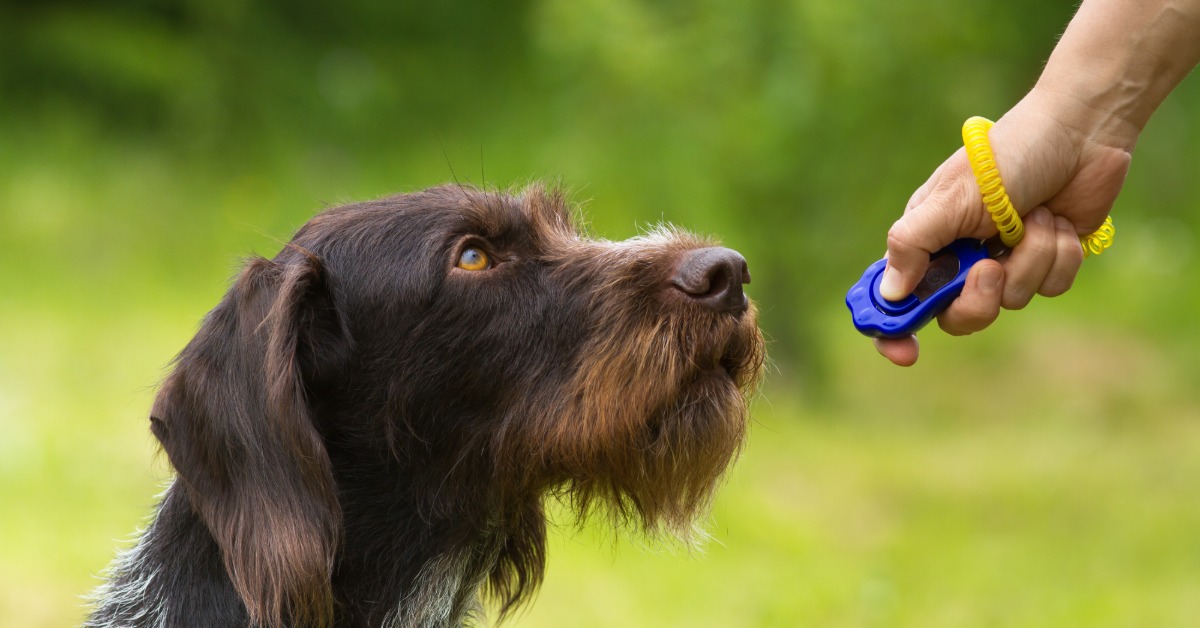
The marker itself can be a clicker, a short word like “yes,” or a hand signal for dogs who are hearing-impaired. What matters most is that the marker is consistent, happens immediately after the desired behavior, and is always followed by something your dog values (typically a treat).
The Science Behind the Mark
Your dog’s brain is constantly working to connect cause and effect. When a reward appears after a behavior, the dog’s brain registers that connection and makes that behavior more likely to happen again. The problem is that dogs process cause-and-effect connections in a very short window. Research in animal behavior puts that window at roughly half a second to one second.
If you’re fumbling for a treat while your dog holds a sit, by the time that treat lands in their mouth, your dog’s brain has already moved on. You might be rewarding them for breaking the sit, glancing at a squirrel, or sniffing the ground. The marker bridges that gap. It fires at the exact right moment and holds the dog’s attention on what they just did, even while you reach for the reward.
Marker vs. Clicker: What’s the Difference?
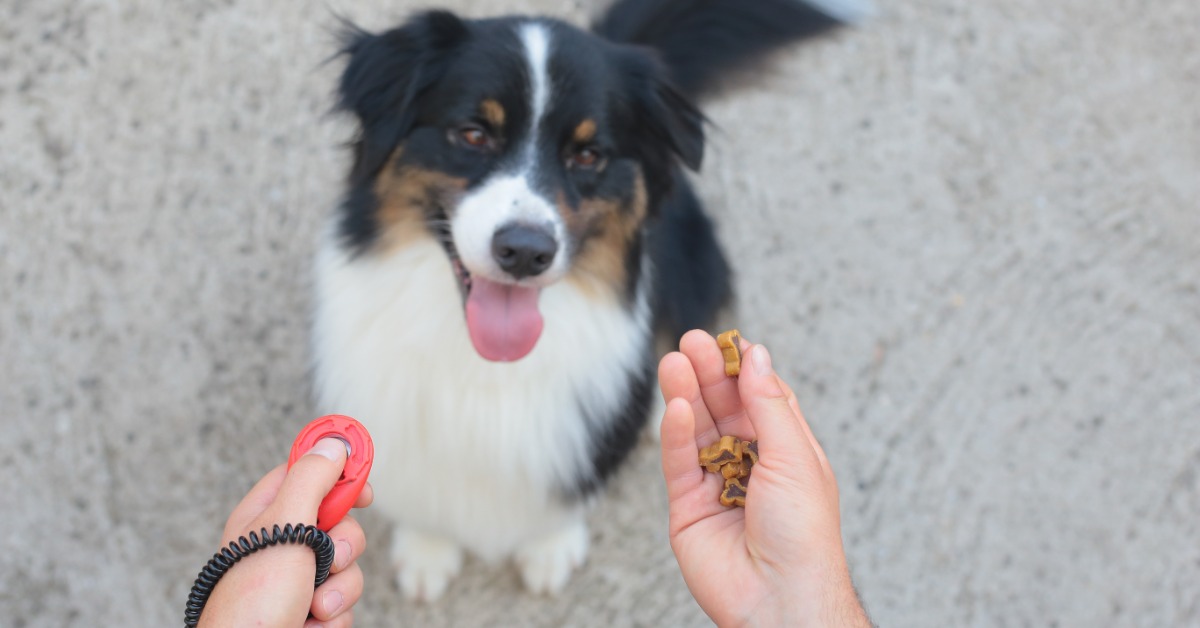
You’ve probably also heard the term “clicker training” and wondered if it’s the same thing as marker training. Clicker training is one version of marker training, and it employs a small handheld device that produces a distinct clicking sound as the marker.
A clicker works well because the sound is unique. It doesn’t occur naturally in your dog’s environment, so it holds a specific meaning and nothing else. Your dog probably won’t hear something similar on a walk and get confused.
That said, a verbal marker like “yes” works just as effectively for most dogs. The tradeoff is that your voice can vary in tone and timing, which introduces inconsistency.
What Counts as a Reward
The reward that follows your marker creates a positive association with the desired behavior, and what you use as the reward has to matter to your dog.
High-value rewards are things your dog finds extremely motivating. Some popular ones are small pieces of chicken, cheese, hot dog, or whatever they go crazy for. Low-value rewards might be their regular kibble or a piece of carrot. Neither is wrong, but the value should match the difficulty of what you’re asking.
You’re also not limited to food. Some dogs are highly motivated by a short game of tug, access to sniff something interesting, or a burst of excited praise. Marker training works with all of these. You mark the behavior, then immediately deliver whatever your particular dog finds most rewarding.
Building Communication Through Repetition
Consistency is what makes marker training work. Every time you mark and reward a behavior, you’re reinforcing a clear line of communication between you and your dog. Your dog starts to understand that paying attention to you and offering specific behaviors leads to good things.
This builds what trainers call engagement, meaning your dog is actively working with you rather than just tolerating the session. Dogs that train with markers often become eager participants. They start offering behaviors and watching you closely because they’ve learned that’s how the game works.
Repetition also builds precision. The more times you mark the exact behavior you want, the cleaner that behavior becomes. A slow, shifting sit becomes a solid, square sit. A two-second stay becomes a stay that holds until you release your dog, even if that’s five minutes later.

How Marker Training Fits Into Broader Training
Marker training isn’t a standalone system. It’s a communication tool you layer on top of whatever training approach you use. Whether you’re teaching basic obedience, working on leash manners, or building drive, the marker makes your feedback faster and cleaner.
It works especially well in the early stages of teaching a new behavior, when your dog is still figuring out what you want. Once your dog fully understands and can reliably perform a behavior, you can fade the marker and reward on a variable schedule to maintain the behavior long-term.
Marker training also layers well into structured training programs that emphasize your role as your dog’s leader. When your dog understands that certain behaviors bring rewards and others don’t, they start looking to you for direction. That builds a dynamic where your dog respects your communication because it’s always clear and always consistent.
When to Start and What to Practice First
You can start marker training with a dog of any age. Puppies pick it up fast because their brains are wired to absorb information, but adult dogs are just as capable.
Start with simple, easy behaviors where you can guarantee success. Sit is the classic starting point because most dogs offer it naturally, and it’s easy to capture. Mark the moment the sit happens, reward, and repeat. From there, you can move into down, stay, recall, and any other behavior you want to teach.
Keep these training sessions short, especially early on. Five to 10 minutes of focused training is more productive than 30 minutes of distracted work. Just make sure to end on a success so your dog’s last experience of the session is a win.
Get the Results You’re Looking For
If you’ve been struggling to get clear, consistent responses from your dog, marker training might be the piece your training has been missing. The technique is important because it connects rewards to behavior in a way your dog’s brain is built to understand.
If you want professional support implementing marker training or are dealing with a dog with deep-set behavioral issues, contact Balanced K9 Academy. We work with dogs at every level, including as a dog trainer for aggressive dogs, helping owners build the clear, confident leadership their dogs need. If you’re ready to move past frustration and into progress, reach out, and let’s get to work.